4 direct mail marketing metrics that matter most


How you measure direct mail success and determine your most cost-effective marketing methods hinges on four key metrics:
Response rate
Cost per acquisition
Customer lifetime value
Return on investment
Key Takeaways
- Response rate shows how many people on your mailing list answered your direct mail campaign. To determine your response rate, divide the number of responses by the number of pieces sent.
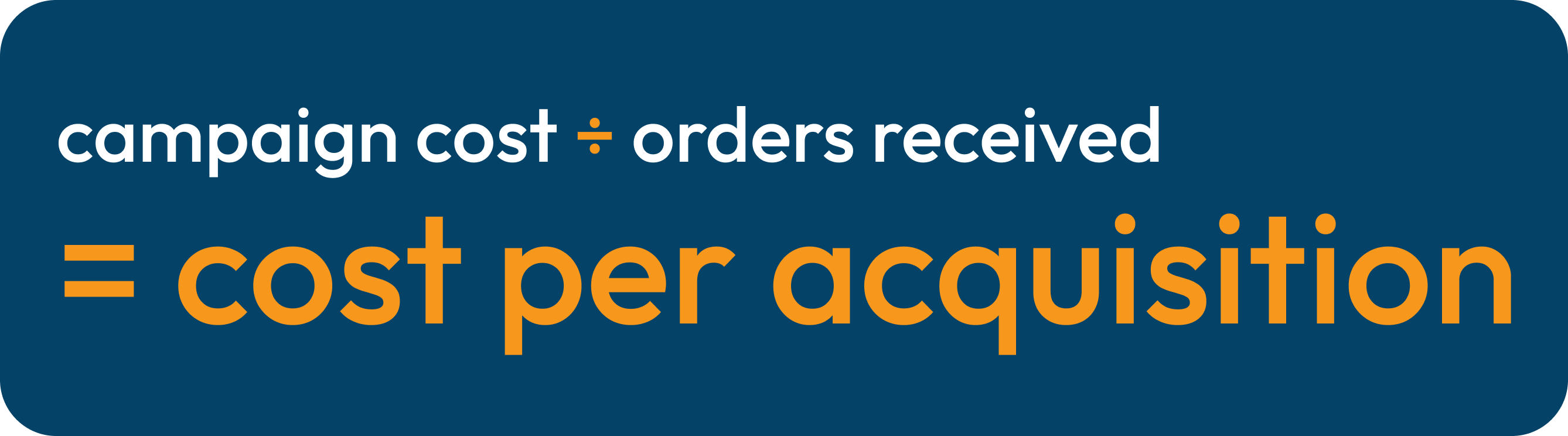
- Cost per acquisition shows what you spent to win each customer. To determine your CPA, divide the total campaign cost by the number of orders you received.
- Customer lifetime value shows how much a customer may be worth over time. The longer a customer makes purchases from your company, the higher their CLV.
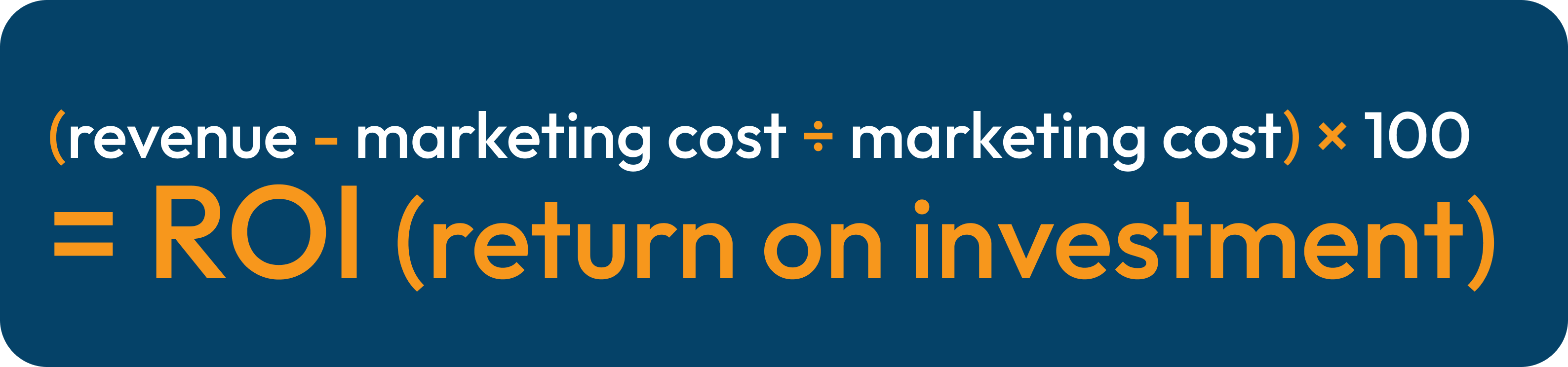
- Return on investment (ROI) shows whether the campaign made money. To calculate your ROI, take your revenue and subtract the total cost of your campaign. Then, divide that number by the campaign cost.
- Use a promo code, dedicated phone number, QR code, or PURL to track results.
You put a lot of time and effort into your direct mail marketing campaigns. Naturally, you want to know if your strategy succeeded or failed. You want to know the results.
How many people received it?
How many responded to it?
How many placed an order for your product or service?
That’s where direct mail marketing metrics help. They show which parts of a campaign are working and which parts need adjustment.
Here are the four direct mail marketing metrics that matter most and how you can use them to your advantage.
1. How to calculate direct mail response rate.
The response rate is the percentage of people on your mailing list who respond to your direct mail campaign. According to the latest ANA Response Rate Report, the average response rate for a “house list” is around 5.3%. A rented list is closer to 2.9%.
To calculate direct mail response rate, divide the number of responses by the number of pieces sent. For example, if you send 5,000 pieces and get 200 responses, your direct mail response rate is 4%.
I got pushback previously from linking to gated content, so we should remove the link. We can just reference that it's from the ANA without linking. However, we need to make sure those percentages are accurate because there's been a new report since the one we link here.

4 ways to track direct mail responses
Promo code
Provide an offer or coupon code that’s unique to each campaign. Customers can share it by phone, online, or in store. Just make sure you’ve trained your staff to request and record the code.
Phone number
Call tracking is a great way to measure your response rate if you have a dedicated line that only takes calls based on a particular campaign. For example, you could set up a number that forwards to your main business line. You’ll see how many calls you receive when you track the number of calls to that dedicated number.
QR code
Add a unique QR code to the mail piece. When someone scans it, they go to a landing page. You can then see visits and actions on your site.
Website landing page URL
As an alternative to a QR code, use a unique webpage URL. A PURL is unique to each mail recipient. That makes it easy to see who visited, clicked, asked for more info, or ordered.
QR codes, PURLs, dedicated phone numbers, and promo codes are among the most common ways to track direct mail responses. Using multiple tracking methods can provide a more complete picture of campaign performance and help you identify the channels your audience prefers.
If you include a variety of tracking methods on your direct mail piece, it will be easy to compare one against the others to see what works best for your business.
2. Cost per acquisition
You’re getting new customers. That’s good news. But wouldn’t you love to know what you spent on getting those customers? Was the expense worth it? Luckily, it’s not complicated to find out. Your cost per acquisition (CPA) will tell you. It helps you compare direct mail with email, print ads, paid search, and social media.
How to determine your cost per acquisition
To determine your CPA, divide the total campaign cost by the number of orders you received. For example, if you spent $5,000 and got 200 orders, your CPA is $25. That is close to the direct mail average of $26.40. You will likely have a higher CPA for direct mail than other marketing channels.
A higher CPA does not always mean a campaign failed. If your response rate and ROI are strong, the campaign may still be worth it.
3. Customer lifetime value
Studies show that it costs businesses 5-12x more to earn a new customer than it does to keep a current one. While it’s important to always look for new customers with your marketing efforts, don’t forget about your current corps of supporters. If you don’t keep them happy—if you don’t solve their problems and give them what they need—there’s nothing to stop them from taking their business elsewhere.
Determining customer lifetime value (CLV) can be a bit more complicated than the other numbers, but it’s one of the most important direct mail marketing metrics to measure. The CLV shows how much revenue a customer may bring in over time. The longer a customer makes purchases from your company, the higher their CLV. Businesses use this figure to identify the customer segments that are most valuable to their company.

How to calculate customer lifetime value
The simplest way to calculate a customer’s CLV is to take the total revenue you made from that customer and subtract the costs of acquiring and serving them. If your customer’s CLV is $2,000 and you’re spending that much to acquire them (based on your marketing expenditures, etc.), your business is in trouble. You have to find a way to reduce your acquisition costs.
Here’s an example. You sell custom t-shirts online. You spend $5 to bring in one customer. That customer buys seven tees a year for 10 years. You earn $10 per t-shirt, or $70 a year. Over 10 years, that's $700. Since you only spent $5 to get this customer, their lifetime value is $695.
You can calculate CLV by actual purchases over the years—like with the previous example—or you can predict what your customers will spend. Naturally, it’s easier to figure CLV if you have a subscription-based business.
For example, businesses like BarkBox or HelloFresh charge the same amount each month for their products/services. Their customers can pay monthly or annually. Thus, it’s easier to predict a customer’s lifetime value as opposed to the aforementioned online business.
The main point is simple: know what a customer is worth, then focus on retaining them via all your marketing channels.
4. How to measure direct mail success with ROI
Direct mail ROI is often the clearest sign of campaign success. Your return on investment shows whether the revenue from the campaign was greater than the cost of the campaign.
Direct mail consistently delivers strong returns, with recent industry benchmarks reporting ROI well above many traditional marketing channels. Actual results vary based on audience targeting, offer, creative, and campaign execution.
How to calculate ROI
To calculate your ROI, take your revenue and subtract the total cost of your campaign. Then, divide that number by the campaign cost. For example, if a campaign generates $6,000 in revenue and costs $5,000 to execute, the profit is $1,000. Divide the $1,000 profit by the $5,000 campaign cost and multiply by 100 to calculate an ROI of 20%.
Frequently asked questions
What is a direct mail response rate?
The response rate is the percentage of people on your mailing list who respond to your direct mail campaign.
How do you calculate direct mail response rate?
Divide the number of responses by the number of pieces sent. For example, if you sent out a 5,000-piece mailing and received 200 responses, that would give you a 4% response rate.
How can you track direct mail responses?
Use a promo code, a dedicated phone number, a unique QR code or a website landing page URL. You can use one or more on each direct mail piece.
What is cost per acquisition?
Cost per acquisition is the amount you spend to get one new customer. It can help you compare your direct mail marketing efforts to other marketing channels and determine your most cost-effective marketing methods.
How do you determine cost per acquisition?
Divide the total campaign cost by the number of orders you received.
What is customer lifetime value?
Customer lifetime value is the revenue you can expect from a customer over the full life of the relationship. Businesses use this figure to identify the customer segments that are most valuable to their company.
How do you calculate customer lifetime value?
Take the total revenue from that customer and subtract the cost to acquire and serve them.
How does CLV affect acquisition cost decisions?
If a customer brings in strong long-term value, you may be able to spend more to win that customer. If CLV is low, you may need to cut acquisition cost or improve retention.
Which metric best shows overall success?
ROI is the best single sign of success, but response rate, CPA, and CLV give the full picture.
How do you calculate ROI for a direct mail campaign?
Take your revenue and subtract the total cost of your campaign. Then, divide that number by the campaign cost.
Understanding your direct mail marketing metrics
All that sounds good, but how do you put it to work? DMS is building new ways to run and manage large direct mail campaigns. We give you clear mail delivery results and help you track and analyze direct mail KPIs at every step of the mailing process. To learn more, contact one of our direct mail experts for a free consultation.

About the author
David Kindervater is a Content Marketing Specialist at DMS with nearly two decades of marketing and content creation experience. He specializes in SEO, AEO, and GEO strategies, creating content that strengthens visibility across search engines and AI-driven platforms. David collaborates with DMS’ marketing/sales team and subject matter experts to develop educational content that helps organizations grow and make better business decisions.
Ready to put us to work?
Reach out today.