5 tips to make your email marketing campaigns stand out


Email marketing remains a powerful tool in today’s digital landscape. With a 4% increase in email volume year over year and over 390 billion emails sent daily across the globe, it’s clear that brands continue to recognize email’s potential.
In fact, email remains one of the most widely used marketing channels, and for good reason. Email marketing brings a hefty return, with $42 earned for every $1 spent. But with all that noise in the inbox, how can you make sure your campaign stands out?
To make your email marketing campaigns stand out, focus on personalization and audience segmentation, automation, building relationships, A/B testing, and a clear call to action. These five elements help your messages reach subscribers at the right time, resonate with your audience, drive engagement, and make your email campaigns more effective.
Key Takeaways
- Personalization goes beyond using a subscriber's name. Being relevant, timely, and anticipating customer needs helps your emails stand out.
- Audience segmentation allows you to create unique customer journeys and deliver messages that resonate with specific groups.
- Email automation helps drive conversions, improve efficiency, and ensures messages reach subscribers at the right time.
- Building relationships should be the focus of your email marketing efforts. Valuable content and customer loyalty are more effective in the long term than promotions alone.
- A/B testing subject lines, content, and CTA buttons can help improve engagement and campaign performance.
- A clear call to action guides subscribers toward the next step and makes your email campaigns more effective.
Effective email marketing isn’t that different from print marketing in strategy. However, you only have a few seconds to entice a prospect to engage with your messaging in this glance-and-go digital world. Here are five tips to help your email marketing efforts get noticed.
1. Personalize and segment your messages
One of the biggest trends in email marketing right now is personalization. Customers want to feel like companies truly understand their needs. This goes beyond simply using their names in the subject line. Being relevant, timely, and anticipating subscriber needs is what will set you apart.
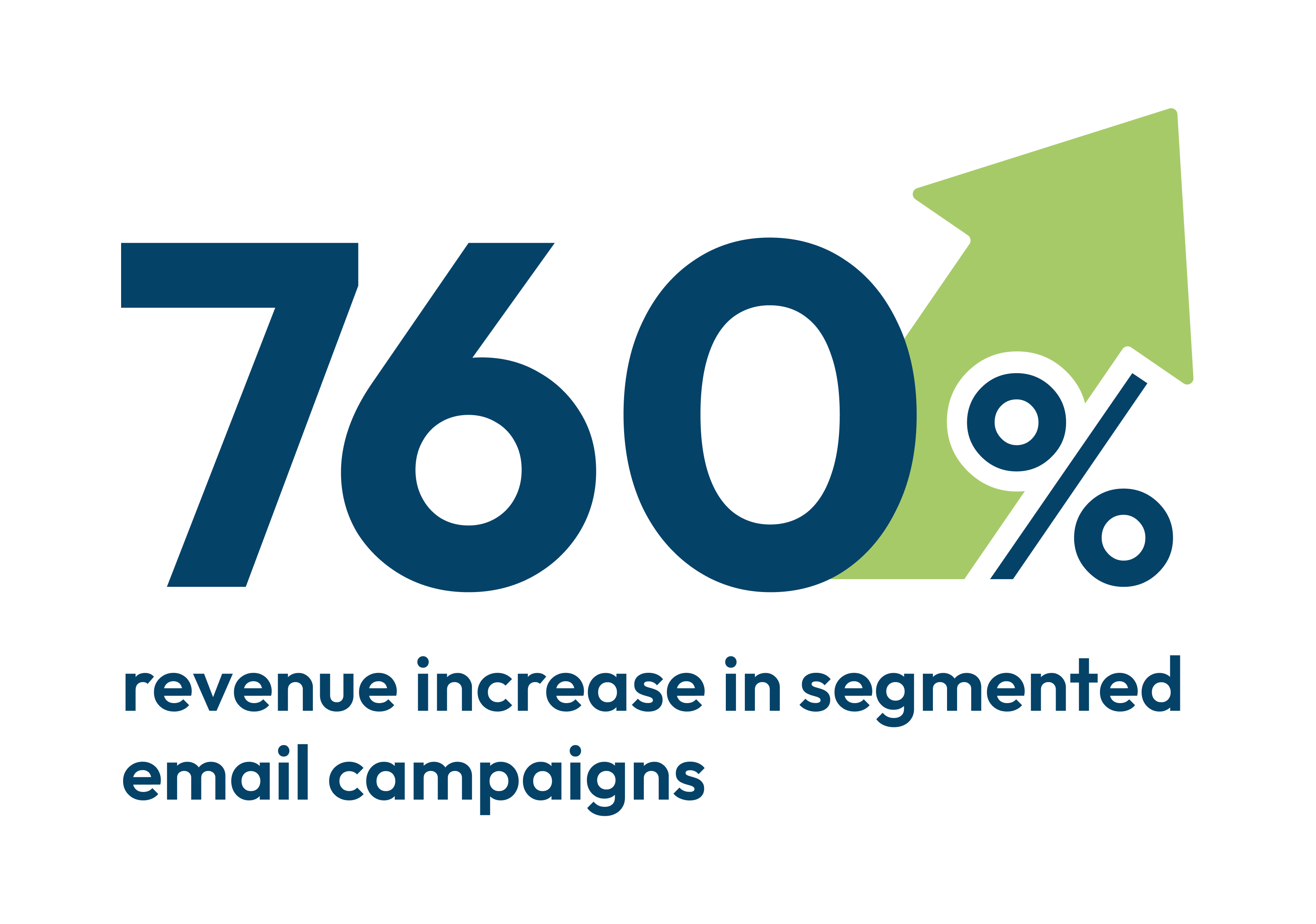
Personalized subject lines alone can boost open rates by 26%, while segmented campaigns have led to a whopping 760% increase in email revenue.
The key here is segmentation—grouping your audience based on shared characteristics allows you to create unique customer journeys that resonate with each group. By segmenting your audience, you can tailor messages that are more relevant, ultimately leading to higher engagement and conversions.
Expert Insight
"Some of the most useful segments come from behavior, not demographics. Someone who visited your pricing page last week needs a different email than someone who hasn’t engaged in six months. When your email platform is connected to your website analytics and CRM, you can segment by what people actually do and where they are in the buying process. That’s when personalization starts to feel relevant instead of generic.”
– Sarah Schwitters, Digital Marketing Strategy & Operations

2. Use automation to reach subscribers at the right time
Another crucial element of a successful email marketing strategy is automation. Not only does automation make your life easier, but it also helps drive conversions and allows you to scale without losing efficiency.
When done right, automated emails ensure that your messages reach subscribers at just the right time, which is essential since sending emails when people are most active significantly improves engagement. Pair this with a compelling subject line, something that sparks curiosity and urgency, and you’re off to a strong start.
3. Build relationships and provide value
Email marketing is not just about sending promotions; it’s about building relationships. While offers are effective, they shouldn’t be the core of your campaigns. Instead, focus on providing value, nurturing relationships, and maintaining customer loyalty.
4. Improve campaign performance through A/B testing
To get the best results, always conduct A/B testing on critical campaign elements like subject lines, content, and call-to-action (CTA) buttons. This helps ensure your messages are consistently improving to resonate with your audience.
“The most common A/B testing mistake I see is calling a winner too early or changing too many things at once," Sarah Schwitters added. "Test one variable, give it enough volume to be meaningful, and judge it by what matters to the business. With privacy features inflating open rates, a subject line that lifts opens but not clicks or conversions isn’t really a winner. Tag your links so you can see what happens after the click.”
5. Guide subscribers with a clear call to action
Last, but far from least, don’t underestimate the power of a clear CTA. Whether you want your recipients to make a purchase, sign up, or visit your website, a well-crafted CTA guides subscribers toward taking action, making your email campaigns more effective. Having a CTA button in the first frame of an email, especially in a mobile format, is particularly effective.
Frequently Asked questions
How can I make my email marketing campaigns stand out?
Focus on personalization, audience segmentation, automation, and providing value to subscribers. Relevant and timely content is more likely to capture attention in a crowded inbox.
Why is personalization important in email marketing?
Customers want to feel like companies understand their needs. Personalization helps create more relevant experiences that improve engagement and conversions.
What is audience segmentation?
Segmentation is the process of grouping your audience based on shared characteristics so you can create unique customer journeys and tailor messages to each group.
How does email automation improve campaign performance?
Automation helps ensure messages reach subscribers at the right time, improves efficiency, supports scalability, and helps drive conversions without increasing manual effort.
Why should I use A/B testing in email campaigns?
A/B testing allows you to evaluate different subject lines, content, and call-to-action buttons so you can continually improve campaign performance and better resonate with your audience.
What makes an effective email call to action?
An effective CTA clearly tells subscribers what action to take next, whether that's making a purchase, signing up, or visiting your website. CTA buttons placed in the first frame of a mobile-friendly email can be especially effective.
Should email marketing be used on its own or with other channels?
Email can be highly effective as a standalone tactic, but it can also work alongside direct mail and other marketing channels to create a more integrated customer experience.
Create email marketing campaigns that stand out
Successful email marketing is about more than sending promotions. It's about reaching customers where they are with messages that are relevant, timely, and valuable. Through email marketing best practices like personalization, audience segmentation, automation, testing, and strong calls to action, marketers can create campaigns that build relationships, drive engagement, and improve results.
As a cost-effective way to deliver your digital message, email remains an important part of a successful direct marketing strategy. Whether used as a standalone touch or in conjunction with direct mail, a well-executed email campaign can help you connect with customers and inspire action.
Remember, reaching customers where they are is key to direct marketing, and email is a pragmatic way to deliver your digital message. Direct Marketing Solutions deploys email campaigns that get responses, both as a standalone touch or in conjunction with direct mail. Acquisition or retention, we create and send emails that get opened. Reach out today to discuss our robust digital capabilities.

About the author
Katherine Kilduff serves as DMS’ Creative Director. With nearly two decades in direct marketing and a decade in print journalism, she specializes in creative concepting, branding, strategy, copywriting, copy editing, art direction, demographic segmentation, and industry research. Alongside DMS’ CCO, Katherine cultivated the company’s internal creative department to develop omnichannel campaigns that compel response and exceed expectations.
Ready to put us to work?
Reach out today.